


What Is a Compression Spring?
Compression springs are designed to resist compressive forces. When a load is applied, the spring shortens, storing mechanical energy that is released when the force is removed.
- Key Features: Open coil spacing, customizable shapes (straight, conical, barrel, hourglass).
- Common Applications: Automotive suspension, medical devices, industrial machinery, electronics, and consumer goods.
What Is an Extension Spring?
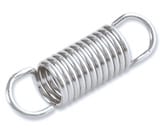
Extension springs are designed to absorb and store energy when pulled apart. With tightly wound coils and a built-in initial tension, they return to their original shape once the force is released.
- Key Features: Closed coil design with hooks, loops, or custom ends.
- Common Applications: Garage doors, agricultural equipment, washing machines, brake assemblies, and aerospace systems.
How to Decide Between Compression and Extension Springs
| Criteria | Compression Spring | Extension Spring |
| Load Direction | Handles compressive or “pushing” forces | Handles tensile or “pulling” forces |
| Coil Configuration | Open spacing, compresses under load | Closed spacing with preload for initial tension |
| Common Uses | Energy absorption, load support, shock resistance | Retraction, return force, secure attachments |
| Custom Options | Multiple shapes and end types, engineered per need | Variety of hooks, loops, or custom end designs |
Choosing the Right Partner for Spring Design
Selecting between compression and extension springs comes down to force direction, performance requirements, and environmental conditions. For projects that demand more than an off-the-shelf solution, we provide:
- Custom Design Engineering to meet exact load, space, and environmental requirements.
- Material Expertise spanning stainless steel, high-carbon steel, specialty alloys, and more. ISO-certified Manufacturing ensures quality and repeatability.
- Industry Versatility, serving aerospace, medical, defense, automotive, HVAC, and beyond.