

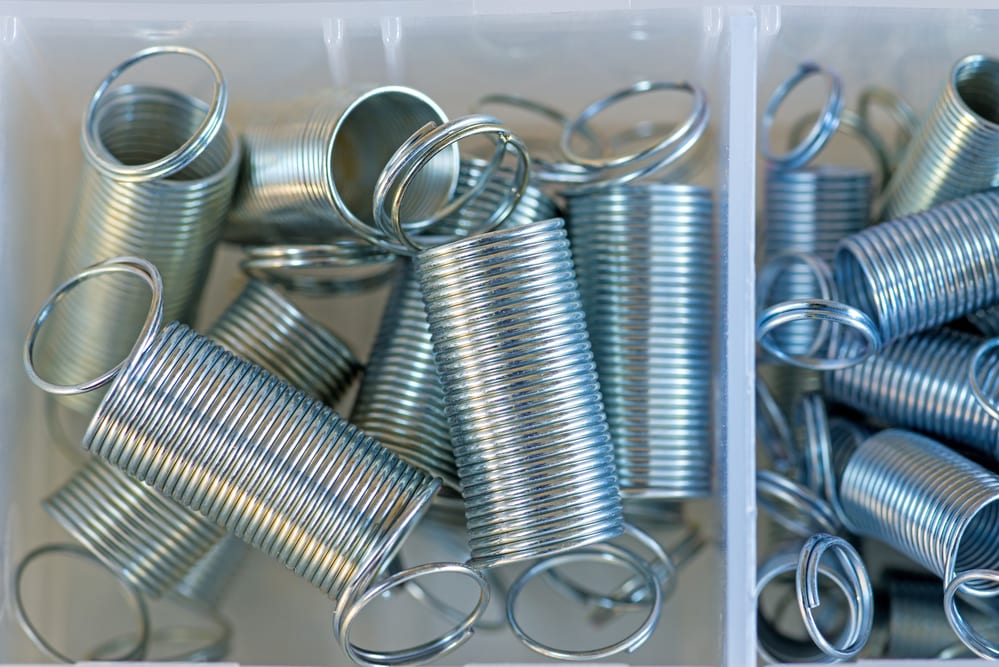
Springs are used in nearly every industry. Stainless steel is one of the most common spring materials because of its durability, resistance to rust and high yield strength. Steel springs are made from wire that has been hardened and tempered to suit the needs of the spring it will become. It starts as a large metal bar, usually weighing several hundred pounds. As it is heated for malleability, the steel is drawn through a series of dies that gradually decrease in size until it reaches the desired diameter for spring manufacturing.
There are two different types of steel used to make springs. Carbon steel, which often becomes music wire, is well known for its uniformity and quality. However, carbon-based steels can rust, so stainless steel is recommended for springs that will be used where it is wet. These are the most common types of steel springs, which can be made in nearly any length or diameter:
- Stainless steel extension springs are at rest when coiled tightly. They exert the most mechanical energy when extended.
- Working the opposite of extension springs, stainless steel compression springs contain the most stored energy when compressed and are at rest when fully extended.
- Stainless steel torsion springs are also tightly coiled but, unlike extension springs, their force is created by twisting, or torque.