
Why Surface Treatments Matter
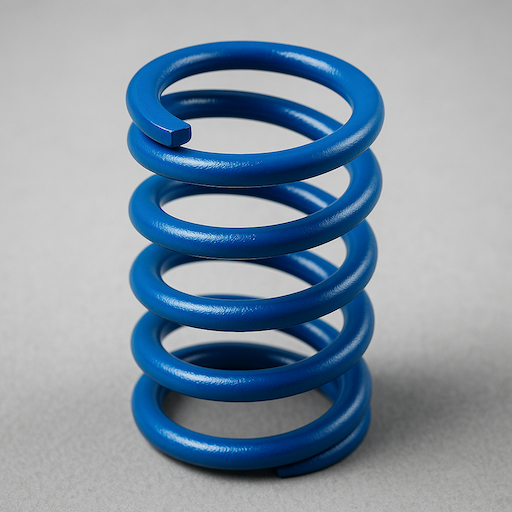
Compression springs are often subject to repeated loading, harsh environments, and tight tolerances. Over time, these factors can lead to fatigue failure, corrosion, or loss of performance. Surface treatments help mitigate these risks by enhancing the mechanical and chemical properties of the spring’s outer layer.
Common Surface Treatment Techniques
1. Coating
Protective coatings such as zinc plating, phosphate, or epoxy are widely used to improve corrosion resistance and visual appeal. Coated springs are especially valuable in environments with high moisture, salt, or chemical exposure. These treatments reduce the risk of surface oxidation and prolong the functional lifespan of the spring.2. Heat Treatment
Heat treating compression springs increases their hardness, tensile strength, and resistance to fatigue. Through controlled heating and cooling cycles, internal stresses are reduced and the spring’s microstructure is optimized for durability under repeated load.3. Shot Peening
Shot peening is a mechanical process that bombards the spring surface with small spherical media, introducing compressive stresses that counteract the tensile forces causing fatigue. This method significantly enhances fatigue life and is often applied to springs used in high-cycle applications.4. Passivation and Deburring
Stainless steel springs often undergo passivation to remove surface contaminants and boost corrosion resistance. Deburring eliminates sharp edges and imperfections that could become stress risers during use, improving both safety and longevity.Benefits of Treated Compression Springs
- Enhanced Corrosion Resistance: Coated springs resist rust and environmental degradation.
- Improved Fatigue Life: Heat-treated and shot-peened springs perform better under cyclic stress.
- Reduced Wear: Surface smoothing and hardening minimize friction and mechanical degradation.
- Aesthetic Value: Certain coatings also offer cosmetic appeal for visible components.